 Skip to main content
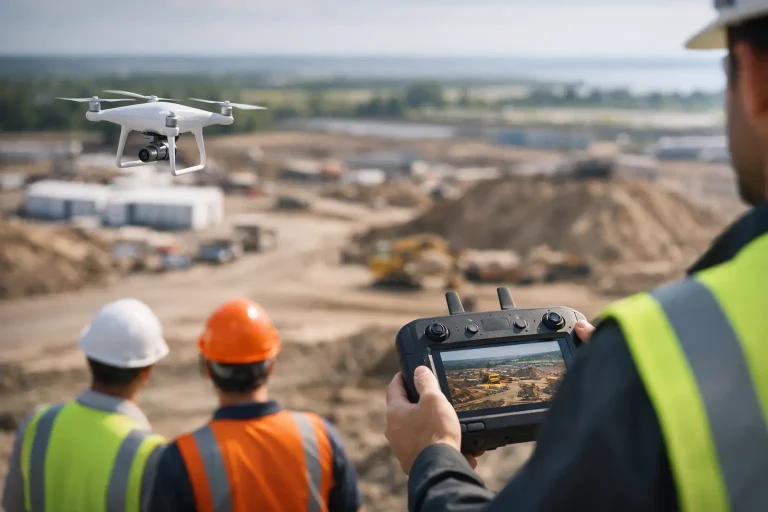
If you have ever reached the end of a project phase and realised the site photos do not quite match the progress reports, you already know the problem. Delays, drainage issues, missed ground changes and incomplete records rarely come from a lack of effort. They usually come from a lack of clear, repeatable visibility. That is exactly where an aerial site monitoring guide becomes valuable – not as a marketing extra, but as a working method for better decisions.
For golf courses, construction projects, estates and large commercial grounds, aerial monitoring gives you a consistent way to see what is changing, where risk is building and whether work is progressing as planned. The real advantage is not simply getting images from above. It is creating reliable visual and mapping records that can be compared over time and used in day-to-day management.
What aerial site monitoring is really for
Aerial site monitoring is often misunderstood as periodic drone photography. In practice, it is far more useful when treated as a structured data service. The objective is to capture repeatable aerial information at planned intervals so that site managers, consultants and contractors can assess progress, verify conditions and respond earlier.
That might mean tracking construction milestones, checking stockpile movement, reviewing access routes, identifying waterlogging, monitoring turf stress or recording roof and asset conditions. On a golf course, it can support drainage planning, irrigation reviews, bunker projects, shaping works and seasonal comparisons. On a construction site, it can provide a clear record of change that is far easier to interpret than scattered mobile phone images and fragmented updates.
The difference is consistency. If the same site is captured using the right flight planning, positioning and output standards, each survey becomes part of a measurable timeline rather than a one-off snapshot.
Aerial site monitoring guide: start with the decision you need to make
The strongest monitoring programmes start with a simple question: what decisions will this data support? That point matters because not every site needs the same outputs or the same frequency.
If you are overseeing a golf course improvement project, you may need orthomosaic mapping that shows exact layout changes, along with progress imagery for stakeholders and contractors. If you are managing drainage performance, repeated flights after rainfall may be more valuable than a fixed monthly schedule. If your concern is plant health, standard RGB imagery may not be enough and multispectral analysis may be the better fit.
For construction teams, the brief often centres on progress verification, earthworks measurement, access planning and visual reporting. Facilities teams may place more value on roof condition tracking and surrounding asset visibility. The point is straightforward – define the operational use first, then design the aerial monitoring around it.
Choosing the right outputs
Not all aerial deliverables offer the same value. Aerial photography is excellent for visual communication, but mapping-grade outputs support more precise site management.
Orthomosaics are one of the most practical products for monitoring. They provide a corrected, measurable overhead image of the whole site, allowing managers to compare layout and progress accurately over time. For land and course managers, that can be useful when reviewing drainage lines, fairway changes, bunker reshaping or path installation.
3D models can add another layer of understanding where terrain, built form or earth movement matters. They are particularly useful when gradients, volumes or structural context need to be reviewed. Topographical outputs can support more technical planning, especially where the site requires design input, contractor coordination or utility awareness.
Video and still imagery also have a role, but a different one. They are valuable for stakeholder updates, board reporting and contractor communication. They can show momentum clearly, but they should not replace measured outputs when accuracy matters.
Frequency matters more than many teams expect
The ideal survey interval depends on how quickly the site changes and how quickly decisions need to be made. Weekly flights may be justified on fast-moving construction works. Monthly capture may be enough for broader estate management. Golf course projects often benefit from milestone-based monitoring, especially where shaping, drainage or irrigation installation is underway.
Too infrequent, and problems become visible after they are already expensive. Too frequent, and you may create more data than the team can realistically use. The right balance is usually tied to project stages, weather sensitivity and reporting cycles.
Seasonality also matters. Turf and land-management sites behave differently across the year. Wet winter conditions, spring recovery and summer stress can all alter what needs to be monitored and when. A fixed schedule is useful, but a responsive one is often better.
Accuracy is not optional when the site is changing
There is a clear difference between attractive drone content and operationally useful drone data. For monitoring to stand up over time, flight planning, ground control, georeferencing and repeatability all matter. If images are captured inconsistently or without the right positional accuracy, comparisons become less reliable.
This is particularly important for survey-led applications. If you are overlaying drainage plans, checking irrigation infrastructure, measuring change or assessing layout against design intent, centimetre-level accuracy can make the difference between confidence and guesswork.
That is one reason specialist operators tend to add more value than generalist drone providers. Good aerial monitoring is not just about flying safely. It is about capturing data in a format that can be used within real operational workflows.
Turning imagery into site intelligence
The most common failure in site monitoring is not poor capture. It is poor use of the outputs afterwards. A folder full of images does not improve decision-making on its own.
Useful monitoring should make it easier to answer practical questions. Has that contractor completed the area claimed? Is surface water behaving differently after recent works? Are stockpiles where they should be? Is a roof defect spreading? Is turf stress isolated or part of a broader irrigation issue?
This is where layered outputs become valuable. Aerial mapping can be combined with utility overlays, drainage layouts, irrigation plans or historical survey data to create a much clearer operational picture. For golf facilities in particular, that joined-up view is often where the greatest commercial benefit sits. It helps teams move from reacting to visible problems towards planning with evidence.
Common mistakes in aerial site monitoring
One of the biggest mistakes is commissioning flights without agreeing the output standard in advance. If one survey delivers promotional photography and the next delivers mapping data, the records may not compare properly.
Another is treating aerial monitoring as something only needed when issues arise. By that point, the baseline may already be missing. Monitoring works best when there is a record of normal conditions before disruption, weather events or project works alter the site.
A third mistake is ignoring audience. Senior management may want concise visual reporting. Contractors may need annotated progress views. Consultants may require more technical mapping. The same survey can often support all three, but only if the outputs are planned around them.
There is also the temptation to collect everything. More data is not always more useful. Focused, repeatable outputs usually create more value than occasional oversized capture programmes that nobody has time to interpret properly.
A practical aerial site monitoring guide for commercial sites
If you want aerial monitoring to support real site management, begin with a clear scope. Define the site boundary, the assets or work areas that matter most and the decisions the data needs to support. Then decide the right frequency based on site activity, not habit.
Choose outputs that fit the task. For measurement and comparison, prioritise orthomosaics and mapped deliverables. For terrain or built form, consider 3D models. For communication and reporting, include stills or short video capture where useful.
Make sure the specification includes repeatability. That means consistent flight paths, appropriate survey control where needed and a clear naming and reporting structure so historical comparison is straightforward. It is also worth deciding early who will review the outputs and how quickly. Data has most value while it can still influence the next action.
For sites with drainage, irrigation, utilities or phased works, integration matters. Monitoring becomes far more powerful when aerial outputs can sit alongside existing plans and management systems. That is often where a specialist provider such as Vantage Imagery Limited can offer more than imagery alone.
When aerial monitoring is worth the investment
The value is usually strongest where visibility, scale or change make ground-based checks inefficient. Large golf courses, active construction sites, estates with dispersed assets and properties with difficult roof access are all good examples.
It is also worth considering when several stakeholders need a shared picture of the same site. Aerial monitoring can reduce ambiguity, cut down on repeated visits and improve the quality of discussions between managers, consultants and contractors. That does not mean it replaces every site inspection. It means those inspections can become better targeted.
The trade-off is simple. If the site is small, static and easy to inspect from the ground, a full monitoring programme may be more than you need. But where progress, condition or land performance changes over time, aerial monitoring often pays for itself by helping teams spot issues earlier and act with greater confidence.
Good monitoring does not just show you the site from above. It gives you a dependable record of change, and that is often what separates reactive management from informed control.
