 Skip to main content
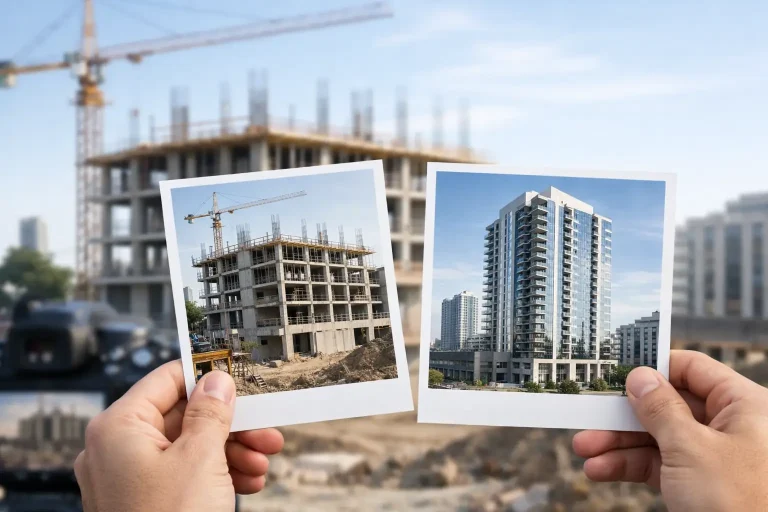
A weekly site update is only useful if people can tell what has actually changed. That is where construction progress photos comparison becomes more than a visual record. When imagery is captured from the same positions, at the right intervals and with survey-grade discipline, it gives project teams a reliable way to track movement on site, verify milestones and spot issues before they become expensive.
For construction managers, asset owners and consultants, the value is not in having more photos. It is in having comparable photos. A random collection of images from different angles, heights and times of day can look impressive in a report, but it rarely supports confident decision-making. A structured comparison process does.
Why construction progress photos comparison matters
Most construction projects suffer from the same reporting problem. Teams are busy, activities overlap, and by the time someone asks for evidence of progress, the site has already changed again. Written updates help, but they can be selective or open to interpretation. Comparable imagery creates a shared visual reference point.
That matters for programme tracking, contractor coordination and client reporting. If the same area is photographed every week or every fortnight from a repeatable aerial position, it becomes much easier to confirm whether drainage runs have been installed, whether hardstanding has advanced, or whether stockpiles are increasing in a way that may affect access and logistics.
It also improves accountability. A good comparison set reduces ambiguity in progress meetings because everyone is looking at the same evidence. If a package is behind, the imagery usually makes it clear. If a milestone has been met, the visual proof is there without relying on broad descriptions.
What makes a comparison genuinely useful
The phrase construction progress photos comparison sounds straightforward, but the quality of the output depends on consistency. The strongest comparisons are built on repeatable capture methods rather than ad hoc flights.
Camera position is one of the biggest factors. If each visit is flown from different heights or angles, the comparison becomes far less precise. The eye starts focusing on the change in viewpoint instead of the change on the ground. Consistent flight paths and defined camera locations solve that.
Timing matters as well. Capturing at regular intervals creates a meaningful sequence. Weekly updates may suit fast-moving groundwork or steel erection. Fortnightly or monthly capture may be enough for slower phases. There is no perfect frequency for every project – it depends on programme intensity, reporting requirements and budget – but a planned schedule always produces better results than occasional reactive visits.
Weather and lighting can also affect interpretation. Strong shadows, low winter sun and surface water after rain may exaggerate or hide certain details. That does not mean flights should only happen in perfect conditions, because construction does not wait for perfect weather. It means image capture should be managed by operators who understand how to maintain usable visual consistency.
Aerial imagery gives context that ground photos often miss
Ground-level photography still has a place on site, especially for recording finishes, defects or confined work areas. But for broader progress tracking, aerial imagery provides a far clearer view of sequencing, access routes, material locations and interaction between different packages.
This is particularly valuable on larger developments or sites with complex infrastructure. From above, teams can compare the relationship between excavation zones, temporary works, utilities corridors and permanent features in a way that is difficult to grasp from the ground. It is a faster way to understand site-wide progress.
Aerial comparison is also useful where stakeholders are not on site every day. Developers, investors, clients and consultants often need a concise visual update that shows real movement without requiring a full walkover. Repeatable drone imagery fills that gap with far greater clarity than occasional handheld photos sent by post-meeting email.
Where photo comparison delivers the strongest commercial value
The immediate benefit is visibility, but the commercial value runs deeper. Construction progress photos comparison supports programme control because teams can verify whether the site condition matches the claimed stage of work. It helps with valuations and payment discussions because visual records provide context around completed elements. It also supports claims management where the timing of site changes matters.
There is a practical health and safety angle too. Aerial comparisons can reveal changes in vehicle routes, storage patterns, exclusion zones and temporary access arrangements. That does not replace formal inspections, but it does provide another layer of oversight.
For principal contractors, a clear archive of progress imagery also improves communication with clients. For clients, it creates confidence that reporting is grounded in evidence. For consultants, it gives a quick route to understanding changing site conditions before a meeting or review.
On some projects, the imagery becomes even more useful when paired with mapping outputs. A visual comparison is powerful on its own, but when combined with orthomosaics, topographical updates or measured overlays, it moves from observation to analysis. That is where specialist providers add real value.
Construction progress photos comparison works best when it is planned early
One of the most common mistakes is starting progress capture too late. If there is no baseline imagery from pre-start or early mobilisation, the comparison record already has gaps. Those gaps can matter later, especially if there are questions around original levels, site setup, access constraints or pre-existing conditions.
Starting early gives the project team a clean timeline from the outset. It also allows camera positions and reporting formats to be established before the site becomes congested. Once cranes, welfare units and temporary compounds are in place, changing the method halfway through can reduce consistency.
Planning early also helps define what the imagery needs to achieve. Some projects simply need visual records for stakeholder updates. Others need more technical outputs, such as georeferenced imagery that can be compared against design information. The brief should match the purpose.
What to look for in a provider
Not every drone operator is set up to deliver useful progress comparison. The difference lies in repeatability, data handling and understanding of operational needs. A provider should be able to maintain consistent capture positions, operate safely within site constraints and deliver images in a format that supports reporting rather than creating extra admin.
Technical competence matters. Certified drone operations, accurate positioning and disciplined flight planning all improve the reliability of the output. So does an understanding of how construction teams actually use imagery. A site manager does not need a gallery of attractive aerial shots if the images do not help verify progress.
Responsiveness is important too. Programmes shift, weather windows change, and reporting deadlines can move at short notice. A specialist partner should be able to adapt without compromising consistency. This is where firms such as Vantage Imagery Limited stand apart – the focus is not on generic aerial photography, but on precision-led visual data that supports operational decisions.
Common pitfalls to avoid
The first is inconsistency. If flights are arranged informally with no fixed methodology, the comparison loses value very quickly. The second is over-capturing. More images do not automatically mean better reporting. A concise, repeatable set is often more useful than hundreds of mixed-angle photographs.
Another issue is treating progress imagery as a marketing asset rather than a management tool. There is nothing wrong with using selected images for client communications, but the primary purpose should be site intelligence. That changes how flights are planned, how outputs are structured and what level of accuracy is expected.
It is also worth being realistic about what photos can and cannot prove. Imagery is excellent for showing visible progress, site arrangement and sequencing. It is less reliable for confirming hidden works or technical compliance unless it is paired with other records. The strongest reporting systems combine visual evidence with site inspections, programme data and measured survey information.
From documentation to better decisions
The best use of construction progress photos comparison is not historical archiving. It is improving decisions while work is still live. A consistent aerial record helps teams see whether access is becoming restricted, whether one area is progressing ahead of another, and whether temporary arrangements are starting to affect efficiency.
That creates a simple but important shift. Instead of asking what happened last month, project teams can ask what needs to change next week. When imagery is current, accurate and easy to compare, it becomes a management tool rather than a file store.
On modern construction projects, clarity has commercial value. If a progress photo comparison can reduce uncertainty, improve reporting and support faster decisions, it earns its place very quickly. The real advantage is not the drone itself. It is the disciplined, repeatable visual record that lets the whole team see the site as it actually is.
