 Skip to main content
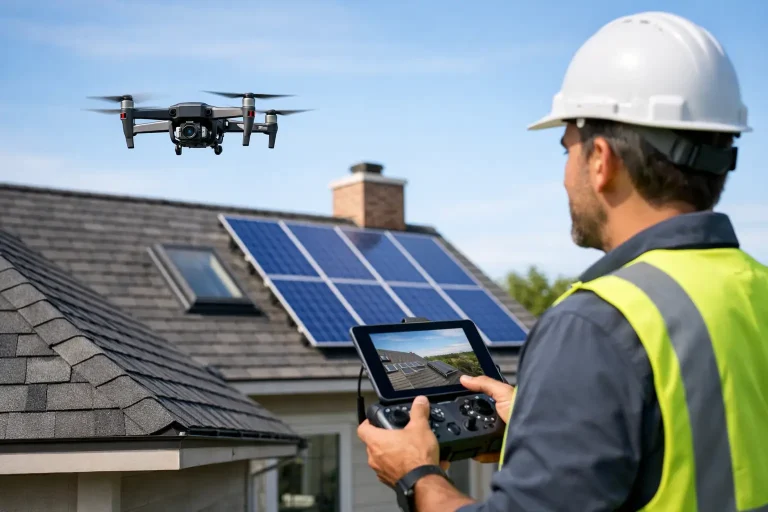
A leaking roof rarely announces itself at the right moment. More often, it appears after water has already tracked through insulation, stained ceilings, interrupted operations or accelerated damage to the structure beneath. That is exactly where drone roof inspection services have changed the conversation. Instead of relying on delayed access, incomplete visual checks or costly temporary equipment, property teams can now assess roof condition quickly, safely and with a far clearer view of what is actually happening.
For commercial buildings, golf clubhouses, maintenance facilities, hospitality venues and larger estate assets, the value is not just convenience. It is precision. A drone inspection can reveal slipped coverings, standing water, damaged flashings, blocked gutters, membrane deterioration and early signs of failure before minor defects become expensive repairs. When that imagery is captured by an experienced operator who understands inspection objectives, the result is actionable information rather than a folder of aerial photographs.
What drone roof inspection services actually deliver
At a basic level, a drone roof inspection uses a remotely piloted aircraft fitted with a high-resolution camera to capture detailed imagery of a roof from multiple angles. The real benefit, however, lies in how that information is collected and interpreted. A proper inspection is planned around the roof type, the condition concerns, the access constraints and the decisions the client needs to make afterwards.
For a facilities manager, that may mean identifying isolated defects for targeted maintenance. For an estates team, it may be about establishing a condition record across several buildings. For a golf club or leisure site, it may involve inspecting clubhouse roofs, greenkeeping compounds or maintenance stores without interrupting day-to-day operations. In each case, the inspection should support a practical next step.
This is why the quality of the operator matters. The aircraft is only one part of the process. Good drone roof inspection services combine safe flight planning, close visual capture, consistent image quality and reporting that helps clients distinguish between urgent defects, routine maintenance items and areas that simply need monitoring.
Why traditional roof inspections often fall short
Conventional inspection methods still have their place, especially when physical testing or repair works are required. But they can be slow, disruptive and expensive for initial condition assessment. Access equipment, scaffolding and cherry pickers all add time and cost, and in some locations they create practical problems of their own.
There is also the issue of perspective. A person standing on one part of a roof cannot always see the whole roof system clearly. Fragile surfaces, height risks and limited sight lines can all reduce the quality of the inspection. By contrast, a drone can capture ridgelines, junctions, parapets, valleys, gutter runs and difficult-to-reach details with far greater efficiency.
That does not mean drones replace every conventional survey. If a roof requires intrusive investigation, moisture testing or immediate hands-on repair, a contractor still needs physical access. The strongest use case for drones is often at the diagnosis stage – identifying where the real issues are, reducing unnecessary access and helping teams direct specialist repair work more efficiently.
Where drone roof inspection services add the most value
The strongest return usually comes on buildings where access is awkward, the roof area is substantial, or recurring defects need better evidence. Flat commercial roofs are a common example. Ponding water, membrane fatigue and edge detail failures can be difficult to assess from ground level, yet are easy to capture from above.
Pitched roofs also benefit, particularly where there are concerns around tiles, slates, chimneys, leadwork or flashing lines. Historic or architecturally sensitive buildings can be especially suited to drone inspections because the survey can be completed with minimal disturbance.
For golf facilities and wider land-managed estates, there is another advantage. Roof condition rarely sits in isolation. Water ingress, drainage routes, service corridors and building maintenance priorities are often linked to wider site management decisions. A specialist aerial surveying partner can help place roof defects in that wider operational context, which makes the data more useful than a simple visual check.
What a professional inspection should include
Not all inspections are equal, and this is where buyers should be careful. A low-cost flight that produces a handful of overhead images may look attractive, but it often lacks the detail needed for maintenance planning. Commercial clients should expect a structured deliverable.
That usually starts with pre-flight planning, site safety checks and airspace assessment. Once on site, the drone should capture close-up oblique imagery as well as higher-level overview shots, giving both context and defect detail. Depending on the requirement, the output may include annotated images, condition summaries and prioritised observations.
In some cases, the imagery can also support wider asset management records. Facilities teams may want a dated inspection archive to compare roof condition over time. Property managers may need clear visual evidence to support contractor quotations or insurance discussions. Where precision matters, the inspection should not just show the roof – it should support a decision.
Accuracy matters more than spectacle
Drone technology has matured quickly, but clients should not confuse eye-catching aerial footage with technical inspection capability. For roof assessment, stable flight, image resolution, operator judgement and disciplined reporting matter more than dramatic angles.
A strong provider focuses on clarity. Can the images show the condition of the membrane seams? Are defects captured from angles that make them understandable to contractors? Is the reporting precise enough for a maintenance budget discussion? These are the questions that separate commercial-grade inspection work from generic drone services.
This is also why a survey-led business often brings more value than a generalist operator. Companies such as Vantage Imagery Limited work from a precision-first mindset, where the goal is not simply to fly a drone but to deliver usable data. That distinction matters when maintenance decisions, repair costs and operational continuity depend on the findings.
Drone roof inspection services and health and safety
One of the clearest advantages of drone inspection is reduced exposure to working-at-height risk. That point is obvious, but it is worth stating properly. Sending fewer people onto a roof for an initial assessment can improve safety, reduce setup requirements and shorten the route from concern to diagnosis.
For clients managing multiple buildings, the benefit compounds quickly. A portfolio of assets can be reviewed faster, with less disruption and fewer access arrangements. That can be particularly valuable for sites that remain operational throughout the inspection window, including clubs, hotels, depots and commercial premises.
Still, safety should not be oversimplified. Professional drone operations require their own planning, permissions and controls. Weather, surrounding structures, public proximity and local airspace restrictions all need to be considered. A competent provider will manage those variables carefully and explain any operational limits before work begins.
When thermal imaging may be useful
Some clients assume every roof inspection should include thermal imaging. Sometimes it should. Sometimes it should not. Thermal data can be very useful for identifying moisture ingress, trapped water beneath certain roof coverings, heat loss patterns or insulation defects. But it is only reliable when collected under suitable conditions and interpreted correctly.
Surface temperature, recent weather, roof construction and the timing of the survey all influence results. Used badly, thermal imagery can mislead. Used well, it can add another layer of evidence and help narrow down hidden issues that standard visual imagery may not reveal. The right approach depends on the building, the suspected defect and what the client needs to confirm.
Choosing the right provider
If you are comparing drone roof inspection services, ask simple commercial questions. What exactly will be delivered? Will the findings be clear enough for a contractor to quote against? Is the operator experienced in condition-led inspections rather than just aerial photography? Are they insured, certified and comfortable working on live commercial sites?
It is also worth asking how the output will fit your workflow. Some clients only need a concise visual report. Others need image sets for consultants, maintenance teams or insurers. The best providers tailor the inspection to the decision that follows, because that is where the real value sits.
Price matters, but cost alone is a poor measure. A cheaper inspection that misses a failed detail or produces unusable reporting is rarely a saving. Better information, captured early, usually reduces wasted spend later.
Roof problems are expensive when they stay hidden. The strength of drone inspection is that it makes those problems visible quickly, safely and with a level of clarity that supports real action. If the goal is to protect assets, prioritise maintenance and make better decisions without unnecessary delay, the best time to inspect a roof is usually before it becomes urgent.
