 Skip to main content
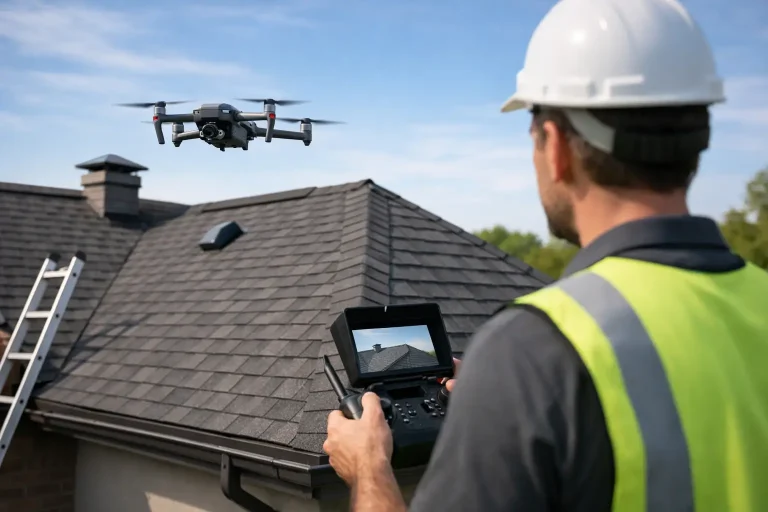
A leaking flat roof rarely announces itself neatly. By the time water reaches an internal ceiling tile, the actual defect may be several metres away, hidden behind plant, parapets or awkward access points. That is exactly why more facilities teams, property managers and commercial site operators are asking how to inspect roofs with drones – not as a gimmick, but as a faster, safer and more accurate way to understand roof condition.
For commercial buildings, the real value is not simply getting aerial photos. It is getting usable visual intelligence. A proper drone roof inspection should help you identify defects early, reduce working-at-height risk, and make better maintenance decisions without scaffolding, cherry pickers or repeated manual checks.
What a drone roof inspection is actually for
At its best, a drone inspection gives you a clear, structured view of the roof as an asset. That means more than a few overhead images. You want enough detail to assess membrane condition, flashing, blocked gutters, standing water, failed seals, cracked tiles, slipped slates, corrosion around roof-mounted plant and deterioration around penetrations such as vents, ducts and skylights.
This is particularly useful on larger commercial sites where access is awkward or disruptive. Warehouses, clubhouses, maintenance buildings, hospitality venues and multi-structure estates often have roofs that are difficult to inspect efficiently from the ground. A drone allows you to review broad roof areas quickly, then focus on high-risk points with close-up imagery.
There are limits, though. A drone cannot see beneath a roof covering, and standard visual inspection will not diagnose every moisture issue. In some cases, thermal surveying, intrusive checks or a follow-up inspection by a roofing contractor will still be needed. The strongest approach is to use drone data to narrow down where those next steps should happen.
How to inspect roofs with drones safely
Safety comes first, because a roof inspection is only useful if it is carried out in a controlled and legally compliant way. Before any flight, the operator should assess the site, surrounding airspace, obstacles, people on the ground and weather conditions. Roof inspections often happen around live commercial environments, which means parked vehicles, pedestrian routes, nearby structures and site traffic all need to be factored into the plan.
Wind matters more than many clients expect. Even where a drone can technically fly, gusting wind can reduce image sharpness and make close inspection around edges and plant less precise. Rain, low cloud and poor light can also limit image quality. Rescheduling is sometimes the right decision if the goal is accurate outputs rather than simply completing the job on a particular day.
The pilot also needs a clear inspection brief. If the aim is to support planned maintenance, the image set should be broad and methodical. If the concern is a known leak above a plant room or office area, the flight can focus more tightly on relevant roof zones, drainage routes and penetrations.
The right equipment makes a difference
Not every drone is suitable for roof work. Stability, camera quality and obstacle awareness all affect the result. For most commercial roof inspections, a professional-grade drone with a high-resolution camera is the starting point. You need enough image detail to zoom in on defects without the file breaking down into guesswork.
A gimbal-stabilised camera is essential because the inspection depends on clean, readable imagery. The operator should be able to capture straight-down shots for layout context, plus oblique angles to inspect upstands, flashing details, parapets and vertical transitions that a purely top-down view may miss.
In some cases, thermal capability is worth considering. It can help identify heat loss or moisture-related anomalies, but thermal inspection is highly dependent on conditions, roof type and the skill of the operator interpreting results. It should not be treated as a magic answer. Used properly, however, it can add another layer of evidence where persistent moisture ingress or insulation performance is in question.
A good inspection follows a method, not guesswork
The most effective roof surveys are systematic. Rather than flying casually around the building and taking interesting pictures, the operator should work through the roof in a repeatable sequence. That usually begins with wide establishing shots showing the roof layout, drainage direction, plant locations and access points.
After that, the inspection moves into detailed passes over key areas. Flat roofs often need close review around laps, joints, outlets, gutters, ponding zones and roof-mounted equipment. Pitched roofs require attention to ridges, hips, valleys, tile lines, leadwork, chimney details and signs of slipped or fractured coverings.
Consistency matters because defects are easier to interpret when the image set is organised. If facilities teams, contractors or surveyors are using the data afterwards, they need to understand where each image sits within the roof plan. That is where an experienced survey operator adds real value. Precision-led capture makes the outputs more useful long after the drone has landed.
What to look for during a drone roof inspection
The obvious defects are often the easiest to spot. Missing tiles, cracked slates, damaged coping stones and blocked gutters usually stand out quickly in high-quality imagery. The more valuable findings, however, are often the early-stage issues that have not yet caused obvious internal symptoms.
On flat roofs, look for standing water, membrane blistering, open seams, edge deterioration and signs of repeated patch repairs. Areas around penetrations deserve particular attention, because seals commonly fail there first. On metal roofs, corrosion, loose fixings and failed laps can be visible before leaks become severe. On older roofs, general wear patterns matter as much as one dramatic defect.
Drainage performance is another major theme. A roof may appear intact but still be underperforming because outlets are partially blocked or falls are poor. If water is collecting in consistent zones, that is a maintenance risk even before the covering itself fails. For estates and larger managed sites, this kind of visibility helps prioritise planned works instead of reacting to the next leak report.
Why image capture alone is not enough
One of the biggest misconceptions is that drone inspection stops at photography. In reality, the commercial value comes from interpretation and reporting. A strong inspection should turn images into a clear record of condition, issue locations and likely priorities.
That may be as straightforward as a marked-up defect report with annotated images. On larger sites, it may involve orthomosaic outputs, measured references or structured condition mapping. Where there are multiple buildings, repeat inspections over time can also show whether defects are stable, worsening or successfully repaired.
For property and facilities teams, this makes budgeting easier. Instead of instructing blanket repairs or multiple exploratory access visits, you can direct resources towards known problem areas. That is especially useful when managing operational sites where disruption carries a cost.
When drone inspection works best – and when it does not
Drone inspection is particularly effective when roof access is difficult, the building is large, or the priority is to understand visible condition quickly and safely. It is also well suited to routine asset checks, storm follow-up surveys, pre-maintenance planning and validating contractor reports.
It is less effective where the defect is entirely concealed, where internal moisture tracing is required, or where dense overhanging structures severely restrict flight paths and sight lines. In those cases, a drone may still form part of the inspection process, but not the whole answer.
The best results usually come when drone data is used to support a wider maintenance strategy. If a building portfolio includes clubhouses, depots, hospitality units or operational facilities, regular aerial inspections can create a clearer baseline of roof condition across the estate. That is often more useful than waiting until a fault becomes urgent.
Choosing the right inspection partner
If you are commissioning a commercial roof survey, the key question is not whether someone owns a drone. It is whether they can deliver decision-ready outputs. That means certified operations, a clear methodology, high-quality capture and reporting that helps you act on what has been found.
For clients who already rely on mapped asset data, there is additional value in working with a specialist that understands how inspection outputs fit into wider property and land-management workflows. Vantage Imagery Limited approaches aerial data in exactly that way – as a precision tool for operational decisions, not just a visual extra.
A roof inspection should leave you with clarity. You should know what condition the roof is in, where the risks sit, and whether immediate repair, monitoring or further investigation is the next sensible step.
The smart use of drones is not about replacing every other inspection method. It is about seeing more, earlier, and with far less disruption – which is often the difference between planned maintenance and an expensive problem that has already spread.
